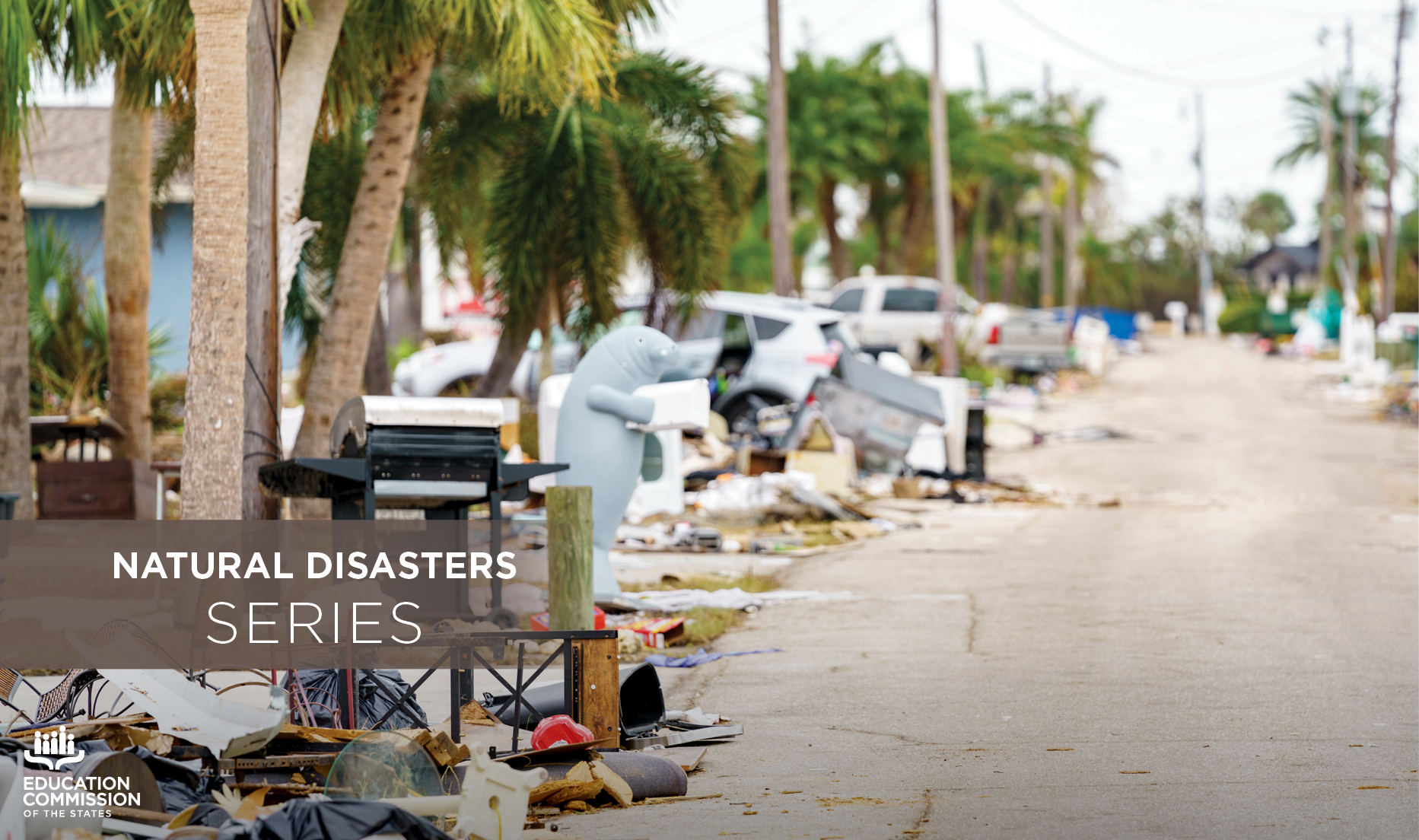
Twenty years ago, Hurricane Katrina ravaged New Orleans, Louisiana, killing 1,833 people and causing $108 billion in damage. It devastated education in the region by destroying over 100 school buildings and displacing nearly two-thirds of K-12 students in the 2006-07 school year.
Many states, and particularly those that tend to experience a higher volume of natural disasters, have policies in place to prepare schools and students for severe weather and minimize the harm it causes to student achievement. However, disasters can be unpredictable, and it is equally important that states develop policies that respond to unexpected disaster-related impacts on schools and students.
The drastic transformation of public education in New Orleans following the complete destruction wrought by Katrina is one of the most well-known examples of education policy change in response to a natural disaster. In the aftermath of the storm, public charter schools replaced every traditional public school in the city with mixed results. However, this type of long-term, large-scale transformation takes years to implement and reaches beyond the scope of typical disaster response policies.
State Examples
In recent years, states have introduced a variety of policies that respond more immediately to the real-time needs of schools and students as they emerge in the aftermath of a natural disaster. These policies often aim to ease the recovery process for schools by loosening existing requirements that may pose a barrier to recovery or providing additional disaster relief funds to affected districts.
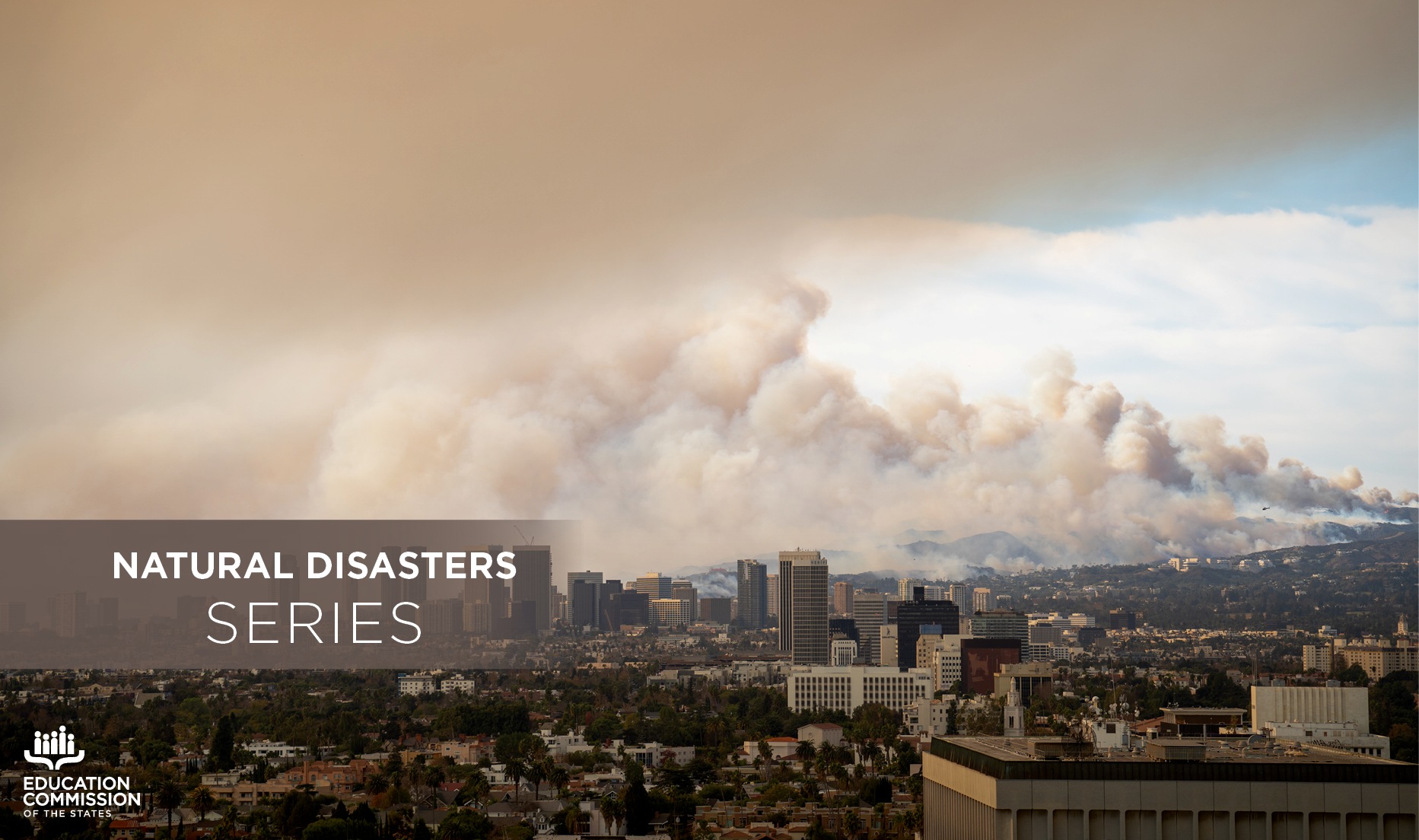
In the wake of the January 2025 wildfires, California Gov. Newsom issued an executive order that aimed to remove statutory obstacles facing students and schools affected by the fires. This includes:
- Suspending state rules to allow displaced students to attend schools outside of their district.
- Making it easier for schools damaged or destroyed in the fires to use temporary facilities.
- Helping schools avoid penalties for not meeting minimum school year requirements.
- Directing state agencies to work with destroyed or damaged schools to develop a plan for serving displaced students and rebuilding.
After Hurricane Helene in 2024, North Carolina enacted multiple bills focused on disaster recovery appropriations and programs. One such bill, passed in October 2024, appropriated $16 million to the department of public instruction to replace compensation lost by school nutrition employees due to school closures resulting from the hurricane. The bill also introduced calendar flexibility for affected schools in making up missed instructional times during the months following the hurricane.
Another disaster recovery bill, passed in March 2025, established a learning recovery program to provide instruction to students in grades four through eight to address interrupted instruction related to the hurricane and appropriated $9 million to support the program.
Natural disasters are not going anywhere; according to the National Centers for Environmental Information, billion-dollar weather and climate events are still increasing in both frequency and cost.
While many states have already taken on the important work of preparing for natural disasters with learning continuity planning and other emergency preparedness policies, these policies are often not enough to mitigate the harm disasters cause to schools and students on their own. States can also be responsive to the unpredictable impacts of natural disasters by providing students and schools with the real-time support they need to recover as quickly and fully as possible.